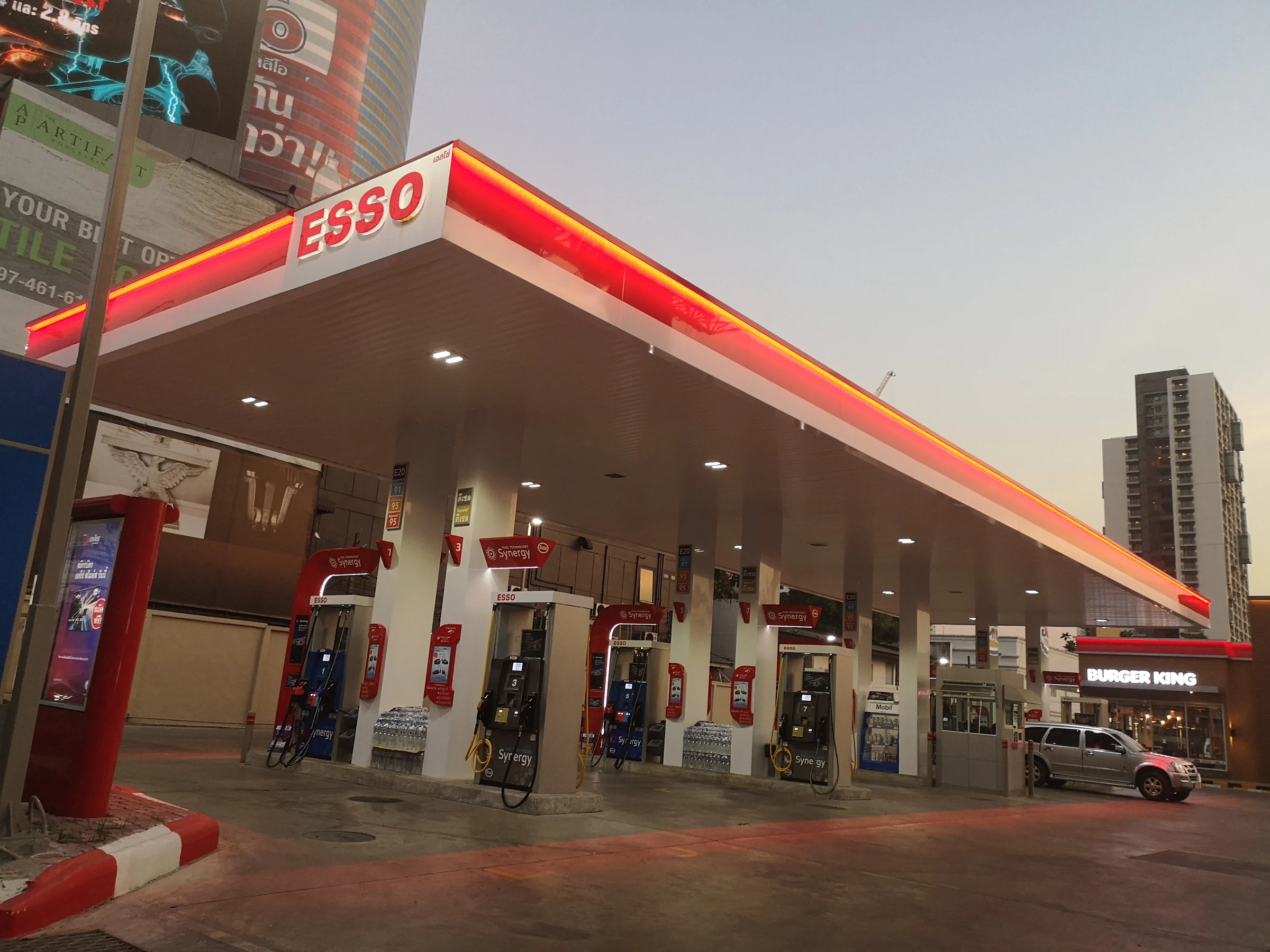
Drivers in Thailand got two pump-price cuts in two days this week, but the relief was uneven. Standard gasohol and regular petrol fell by 70 satang a litre on 5 November and by a further 1 baht on 6 November, 1.70 baht a litre in total. Standard B7 diesel moved only once, down 75 satang on 6 November, and cheaper B20 diesel did not move at all.
What the Oil Fuel Fund decided
The 6 November cut followed a decision by the Oil Fuel Fund Committee, the state body that sets the Fund's levies and subsidies on fuel. The Oil Fuel Fund Office listed the committee's announcement 186/69 on 5 November 2026, with the new rates taking effect on 6 November. The committee said world prices had softened, with diesel closing at about US$155 a barrel on 5 November against about US$166 the day before, and petrol at about US$105 against about US$112. It pointed to easing Middle East tensions, higher crude exports from the Gulf, profit-taking after the US midterm election results and worries about a slowing global economy, as reported by The Nation and Prachachat.
Bangkok pump prices after the second cut
On 5 November, PTT Station and Bangchak cut Bangkok prices for gasohol 95, gasohol 91 and E20 by 0.70 baht a litre, to 40.84, 40.47 and 32.80 baht. PTT Station also cut regular petrol by the same amount, to 50.33 baht. Diesel stayed at 42.54 baht that day.
From 5am on 6 November, PTT Station prices in Bangkok were 49.33 baht for regular petrol, 39.84 for gasohol 95, 39.47 for gasohol 91, 31.80 for E20 and 41.79 for B7 diesel. Bangchak matched the gasohol and diesel prices and cut its E85 by 1 baht to 30.63. Premium grades and B20 diesel were left unchanged. All of these are Bangkok retail prices before the local maintenance tax, so the figure at a pump in another province can differ.
What it means for a tank
On MEM's arithmetic, a 50-litre fill of standard gasohol or regular petrol now costs about 85 baht less than before 5 November (1.70 baht times 50 litres). For B7 diesel the equivalent saving is about 37.50 baht. Drivers filling up with B20 diesel saw no change at the pump.
Why diesel drivers got less
Prachachat reported the committee's new rates as follows. The Fund cut its compensation on B7 diesel by 0.96 baht to 2.37 baht a litre, and on B20 diesel by 1.45 baht to 3.91 baht a litre, while B20's retail price was held steady. On petrol and gasohol the Fund now collects more: 0.51 baht more on regular petrol (11.29 baht a litre), 0.38 baht more on gasohol 95 and 91 (3.37 baht) and 0.23 baht more on E20 (2.73 baht). E85 gained 0.58 baht of extra compensation, to 0.99 baht a litre. The Nation said the changes let the committee lower pump prices while easing its own finances, noting a subsidy bill that had once reached 69 million baht a day.
PTT and Bangchak posted no change for 9 November, so the 6 November prices were still the ones on the boards at the start of this week, according to Thansettakij. Prices can move again at short notice, and the committee itself stressed that saving fuel remains important. For the earlier diesel change in late October, see MEM's report on the refinery-gate formula change, and for the wider cost picture, our October inflation report.